2025 - 2026
Product Designer
AI / SaaS · B2B · Product Design · UX/UI · Complex Workflows · AI-native Workflow
AI / SaaS · B2B · Product Design · UX/UI · Complex Workflows · AI-native Workflow
My role
As Product Designer at WBSO.ai, I work across almost the entire product, from UX and UI to new features, product flows and frontend implementation.
WBSO.ai helps companies manage the Dutch WBSO process, from preparing an application to tracking projects, hours, budgets and progress over time.
My role is to translate complex regulations and administrative processes into clear product logic and intuitive user flows.
I work closely with the founders and development, and use AI throughout my workflow to move quickly from product problem to working solution.
Impact
• Redesigned key workflows to make complex WBSO requirements easier to understand and complete.
• Created more consistent patterns across applications, projects, hours, budgets and reporting.
• Reduced the distance between design and development by taking UX/UI improvements into working frontend.
• Built reusable UX/UI skills and agents to identify inconsistencies and recurring usability issues earlier.
• Created a faster feedback loop between product design and development.
• Helped create a more scalable product foundation for future development.
• Created more consistent patterns across applications, projects, hours, budgets and reporting.
• Reduced the distance between design and development by taking UX/UI improvements into working frontend.
• Built reusable UX/UI skills and agents to identify inconsistencies and recurring usability issues earlier.
• Created a faster feedback loop between product design and development.
• Helped create a more scalable product foundation for future development.
The challenge
The WBSO process is complex by nature.
Companies need to deal with regulations, project definitions, technical documentation, hours, budgets and deadlines.
The challenge was not simply to digitise that complexity, but to translate it into an experience users could understand without hiding important rules or information.
Users need to know where they are in the process, what is still required and what needs their attention.
AI helps me move faster from complex product problems to working frontend, while keeping product judgment human.
Turning regulation into product logic
A large part of my work is translating WBSO rules into understandable user journeys.
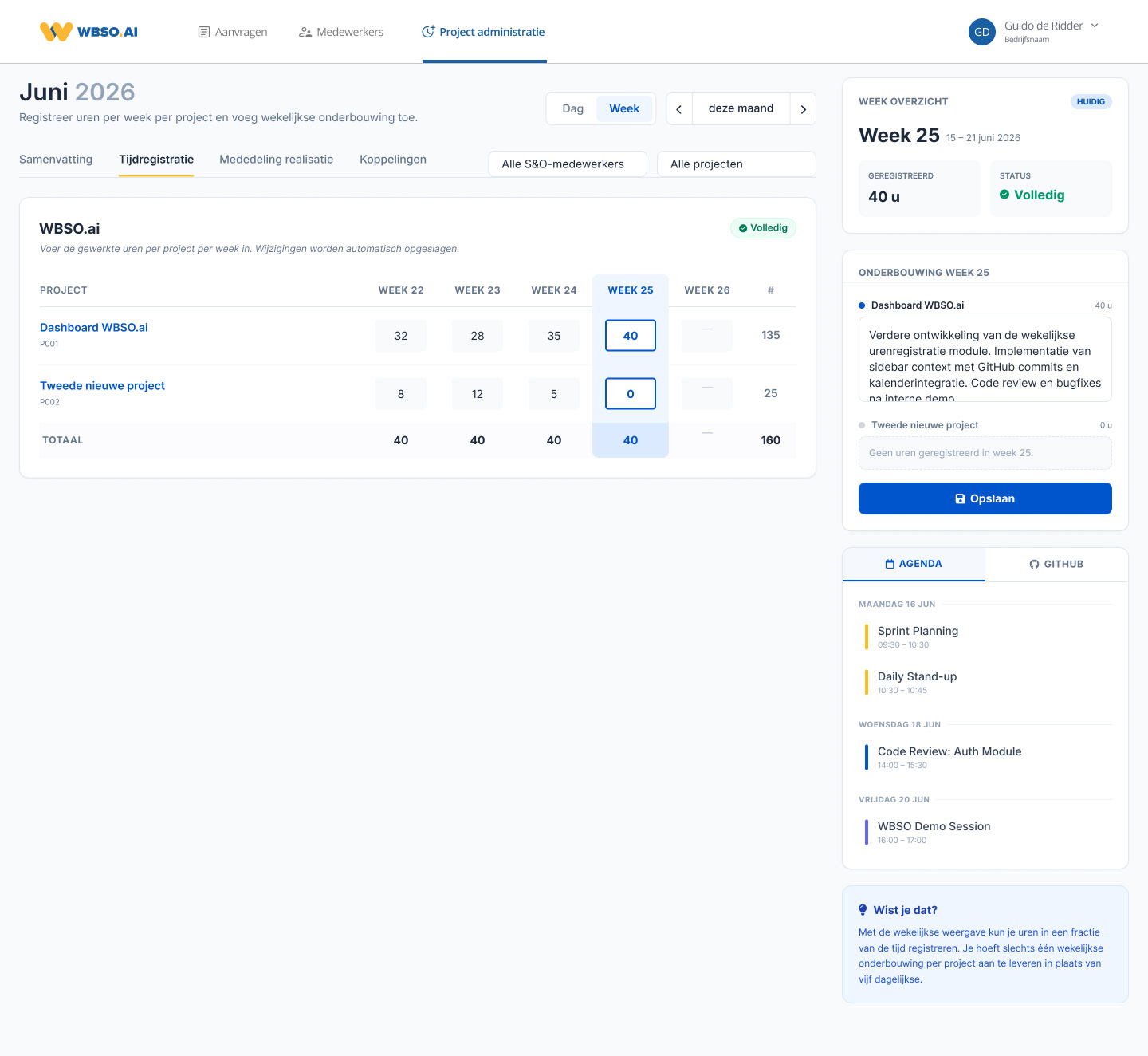
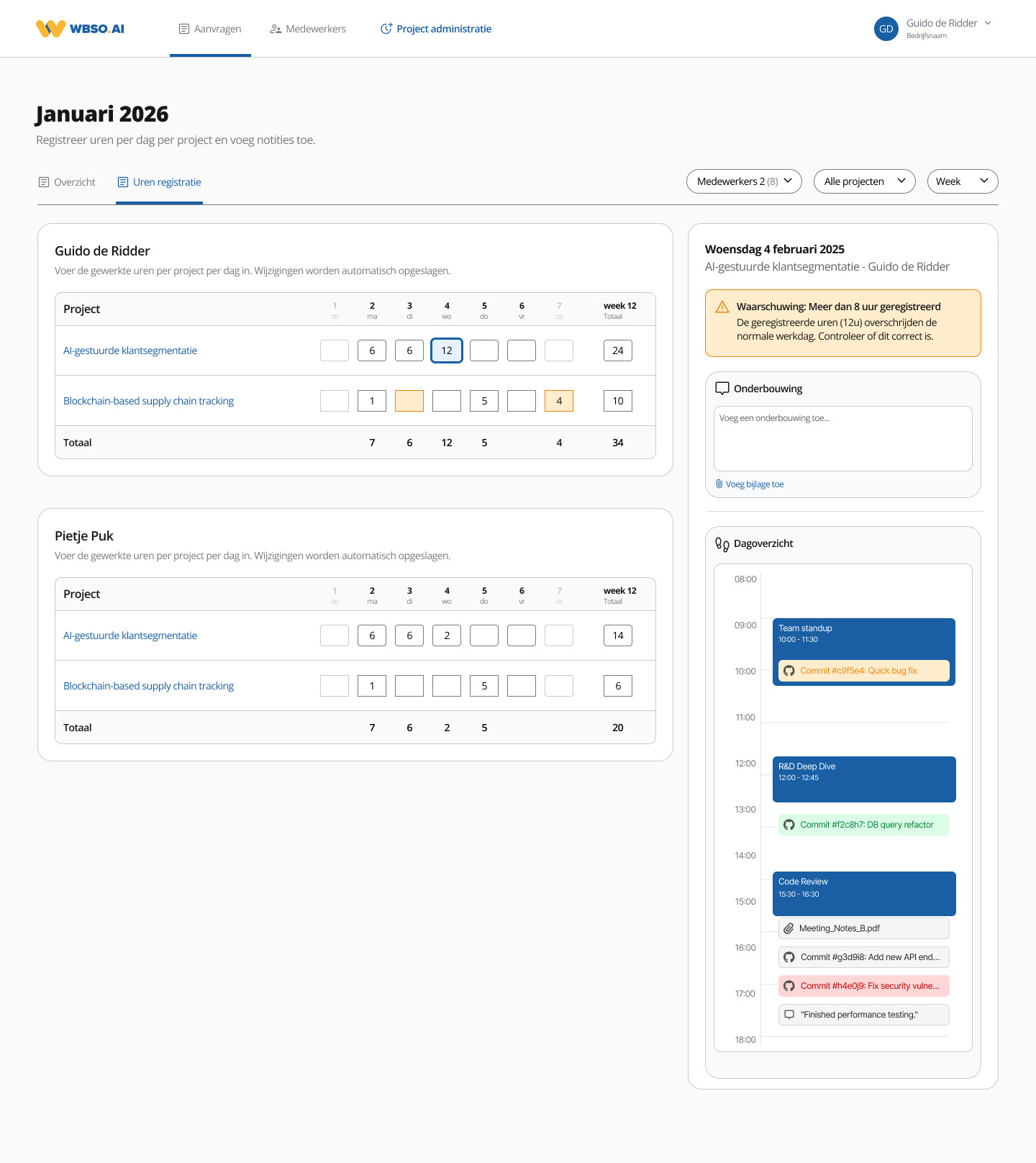
I worked on areas such as application flows, project management, hours registration, budgets, reporting and status feedback.
The aim was to reduce cognitive load and guide users through complex tasks in a more logical and predictable way.
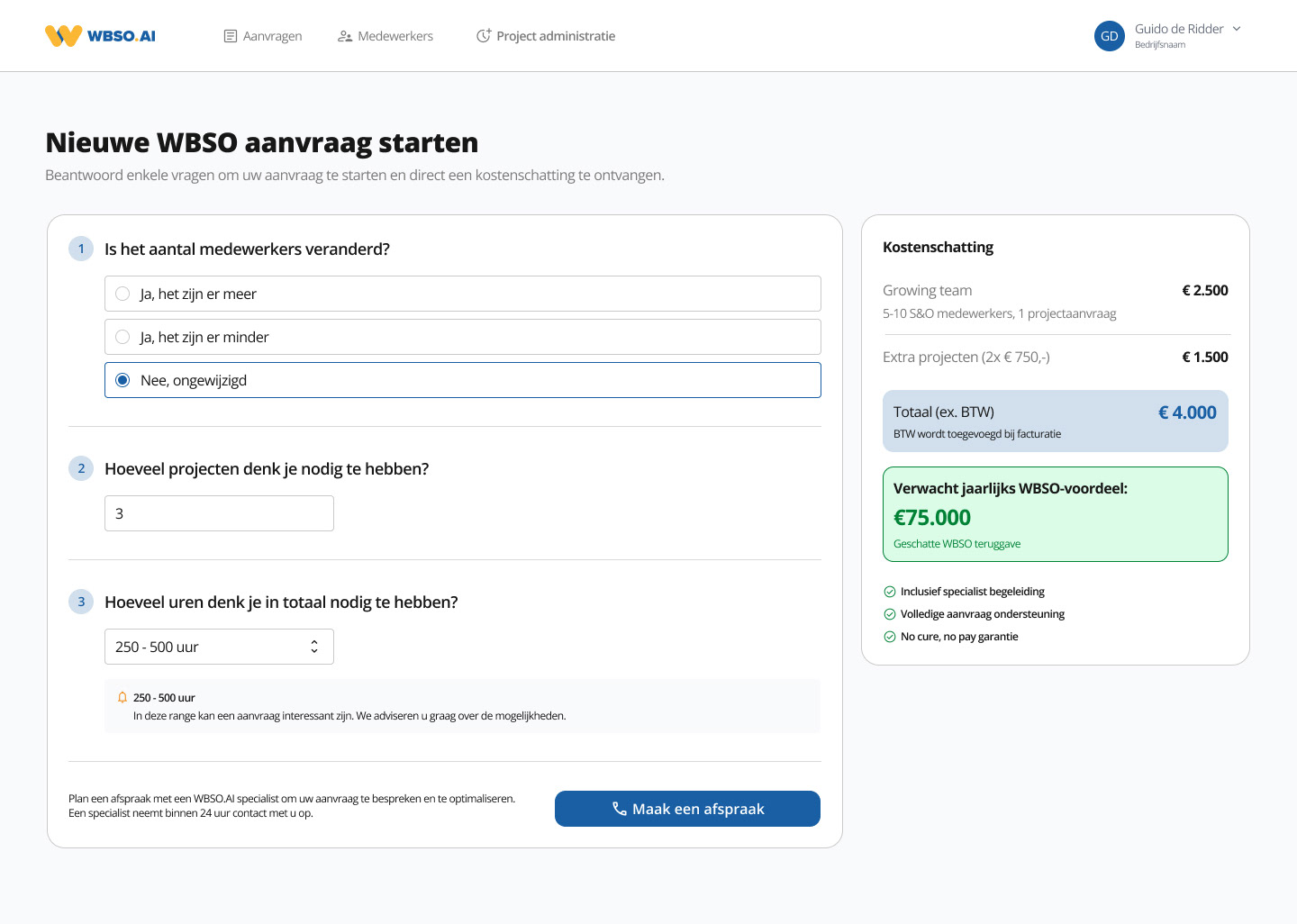
One of the key improvements was the application flow, which I redesigned around clearer steps, better hierarchy, guidance, validation and feedback.
Product dashboards and patterns
The platform also needs to support ongoing administration throughout the year.
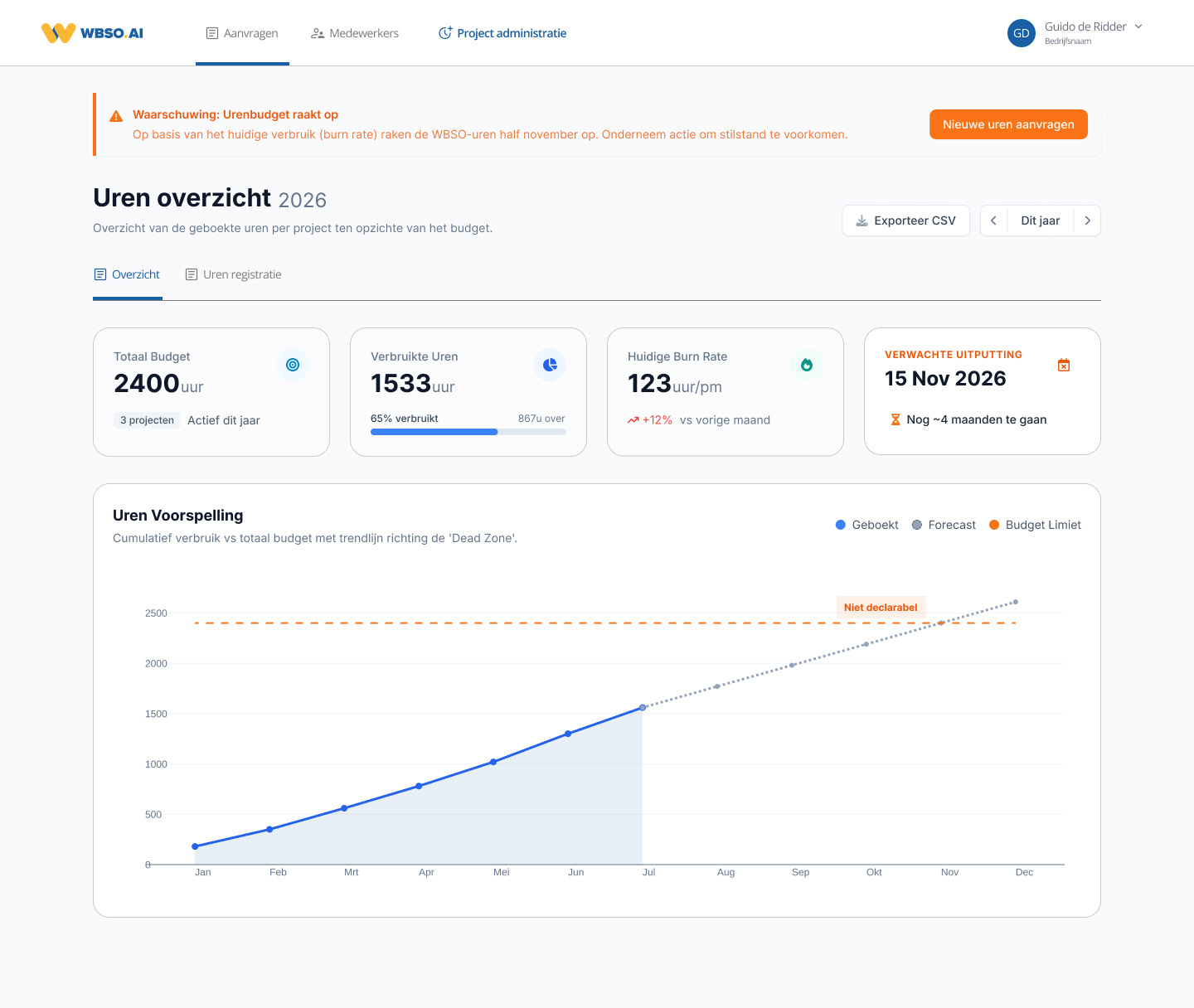
Users need to understand project progress, hours, budgets and status at a glance.
I worked on dashboards and recurring product patterns that make this information easier to understand while still providing enough detail for professional users.
I also introduced more consistent patterns for navigation, forms, status, feedback and data presentation, giving both users and development a clearer foundation for future features.
AI-native product design at WBSO.ai
At WBSO.ai, AI is integrated throughout the way I work on the product.
I use AI to explore product problems, review UX and UI, work with design patterns, prototype solutions and move improvements directly into working frontend.
Instead of stopping at a traditional design handoff, I can often take an improvement further and deliver it as a working change in the codebase, usually as a Pull Request that development can review, adjust and merge.
This allows me to move between product thinking, UX review, Figma and frontend implementation without treating them as completely separate phases. It shortens feedback loops and reduces the amount of translation between design and development.
I also build my own reusable UX/UI skills and agents to review flows, identify inconsistencies and check recurring quality criteria.
The tooling itself is not the important part. The value comes from combining AI with the right product context, user needs, existing patterns and design decisions. Product judgment, prioritisation and final design decisions remain human.
What changed
The product has become more structured around clear user journeys instead of the underlying complexity of WBSO administration.
Regulatory processes are easier to navigate, recurring interactions are more consistent and users have a clearer sense of context across applications, projects and administration.
At the same time, the way design moves into production has become much more direct.
By combining product design with AI-assisted frontend work, reusable skills and agents, improvements can move faster from idea to working product while quality issues can be identified earlier.