2020 - 2021
Lead Designer
Product Design · Design Systems · Global Product · Cross-team Design Leadership · Web · UX/UI
Product Design · Design Systems · Global Product · Cross-team Design Leadership · Web · UX/UI
My role
I joined Polestar through Code d’Azur, initially working in a multidisciplinary SWAT team on high-priority parts of Polestar.com, including Test Drive, Media, Careers, About and Legal.
I later moved into a Lead Designer role, working across four multidisciplinary teams covering the global design system, sales funnel, B2B fleet and content.
My role combined hands-on product design with cross-team design leadership. I helped shape design direction and quality, worked closely with UX, product and frontend teams, and made sure new product experiences remained consistent with the Polestar brand and the wider design system.
A major part of my work was evolving the global design system and helping teams work from a more scalable set of templates, components and shared patterns.
Impact
• Helped shape design quality across four multidisciplinary product teams.
• Contributed to the launch and continued evolution of Polestar.com as a global sales, brand and information platform.
• Helped create a scalable global design system used across markets and product teams.
• Introduced reusable templates and components that reduced duplication and made new pages and features easier to create consistently.
• Helped teams adopt Figma as a shared design environment, improving collaboration between design and development.
• Supported the rollout of local digital experiences across nine international markets.
• Polestar.com sold approximately 29,000 cars in 2021.
Building Polestar.com
Polestar was building a new kind of automotive brand and needed a digital experience that could support both brand expression and the entire customer journey.
Rather than relying on traditional dealership-led sales, Polestar.com became a central channel for discovering the brand, exploring cars, booking test drives and moving through the purchase journey.
Working within multidisciplinary teams, we designed and launched the first major version of Polestar.com within six months.
My work covered both new customer-facing experiences and the foundations needed to scale the platform over time.
Polestar case video made by Code d'Azur.
From SWAT team to design leadership
I initially worked within a SWAT team focused on high-priority and often time-sensitive parts of the platform.
These projects included flows and experiences such as:
• Test Drive
• Media
• Careers
• About
• Legal
• Media
• Careers
• About
• Legal
The team worked under tight deadlines and with many stakeholders, so speed had to be balanced with usability, visual quality and consistency.
As the product organisation grew, my role expanded into design leadership across four multidisciplinary teams.
I helped teams align around shared UX and visual principles, provided design direction and art direction, and stayed hands-on in product design.
Creating a scalable design foundation
As Polestar.com expanded, the challenge was no longer just designing individual pages.
Different teams and markets needed to create new experiences quickly while keeping the product coherent and recognisably Polestar.
I worked on the foundations of the global design system and introduced a more structured template approach for .com pages.
Reusable components, patterns and templates gave teams a common foundation while still allowing flexibility for different types of content, campaigns and customer journeys.
This helped reduce duplicated design work and made it easier for teams to create new experiences without starting from scratch.
Choosing Figma
As Lead Designer, I helped move the team towards Figma as the shared design environment.
At the time, Figma was still relatively new compared with the tools many teams were using.
I helped guide teams through the transition and showed how Figma could support a more collaborative way of working around the design system.
The move made it easier for designers to work from the same components and patterns and created a smoother connection between design and development.
Rather than treating the tool change as an isolated migration, we used it as an opportunity to improve how teams collaborated and maintained the design system.
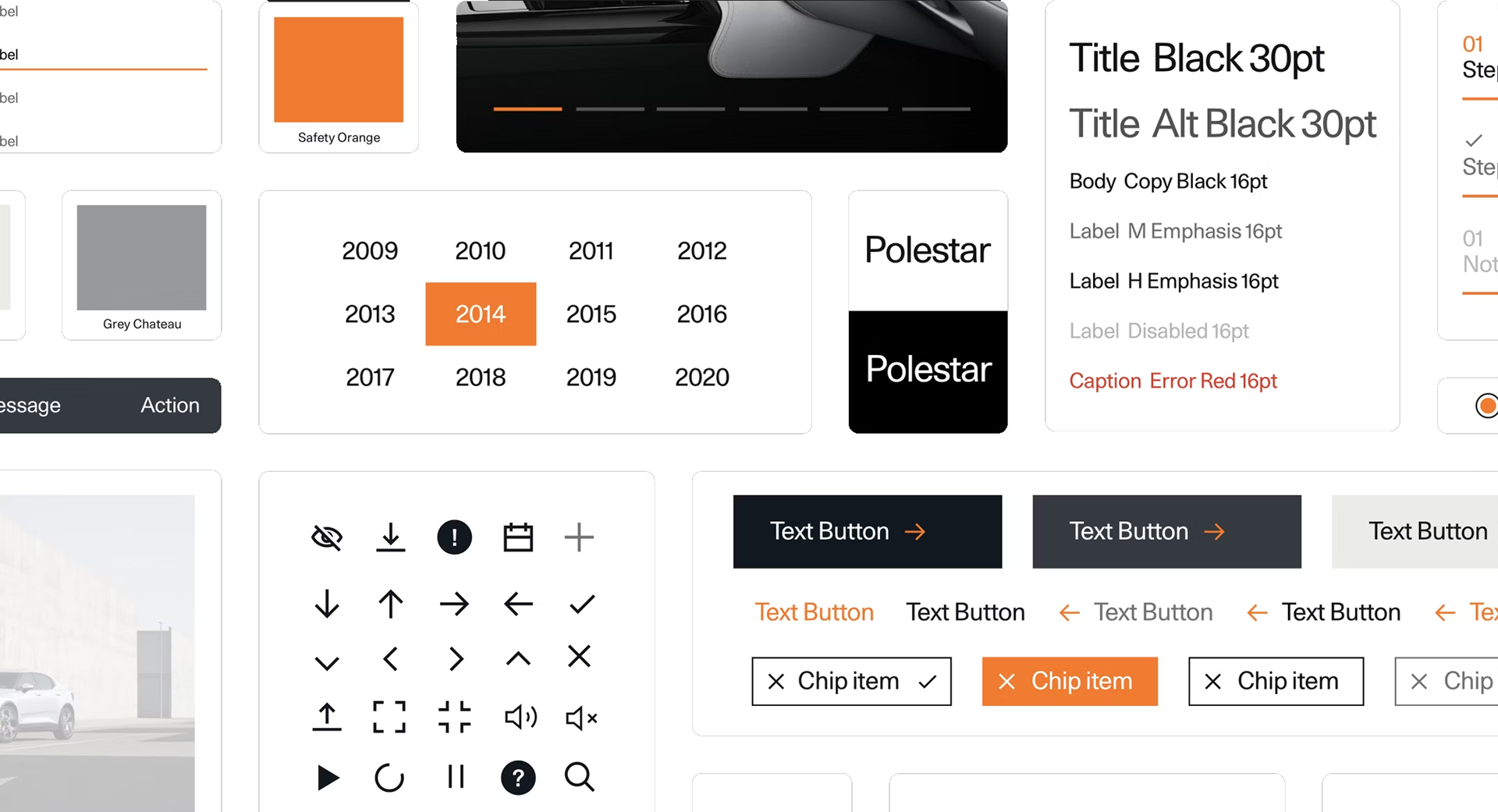
Design system
The global design system became an important part of how Polestar.com could scale.
I helped establish its foundation and worked with the Design System team to maintain consistency between product design, interaction patterns and the wider Polestar art direction.
The system provided teams with a shared set of reusable components, templates and patterns.
Instead of recreating solutions for each new page or campaign, teams could build from a common foundation and focus more of their effort on the specific customer problem they were solving.
This helped support:
• consistent product and brand experiences;
• faster creation of new pages and features;
• better collaboration between design and development;
• reuse across multiple product teams;
• expansion into different international markets.
• faster creation of new pages and features;
• better collaboration between design and development;
• reuse across multiple product teams;
• expansion into different international markets.
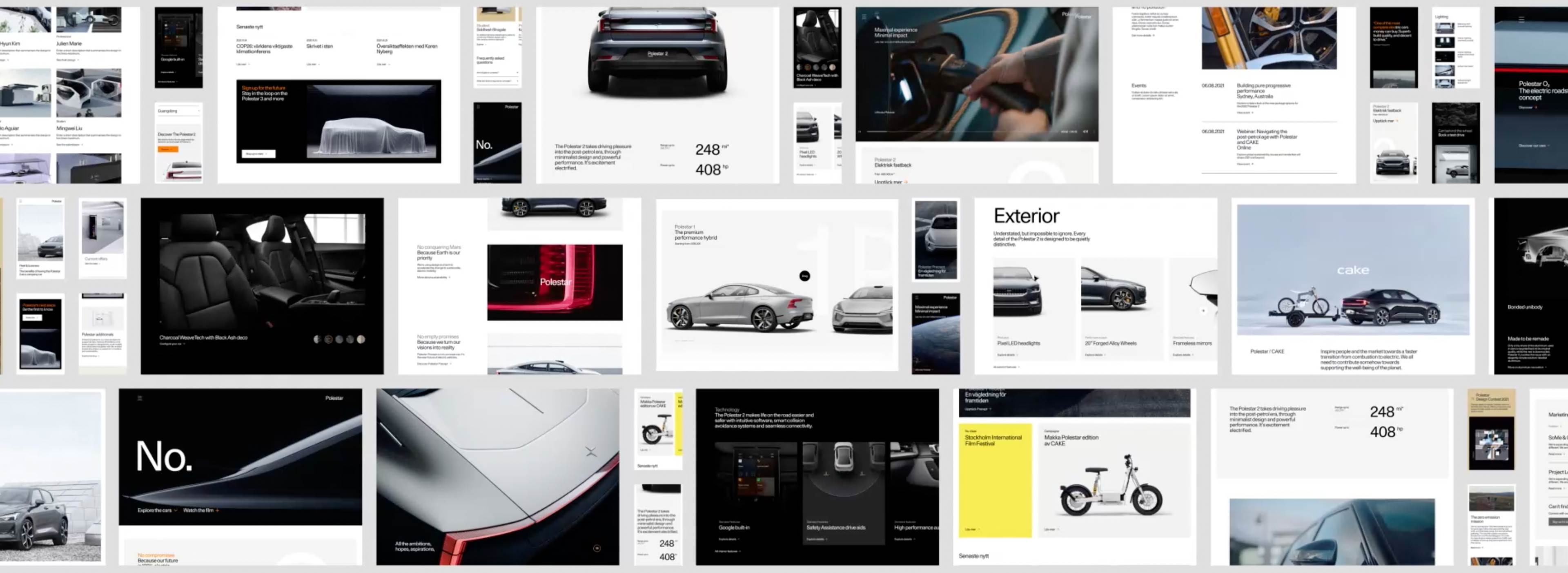
Designing for a global product
After the initial platform launch, Polestar expanded the experience across nine key markets.
That introduced another layer of complexity.
Different markets had different regulations, commercial needs and customer behaviours, while the overall product still needed to feel like one coherent global Polestar experience.
I worked with product, UX, development and local market teams to help adapt experiences while maintaining consistency through the shared design system.
The goal was not to make every market identical, but to create enough structure that local differences could be supported without fragmenting the overall product.

Across the customer journey
The platform covered a broad customer journey, from first brand interaction through product discovery and purchase.
My work included designing and reviewing experiences across different stages of that journey, while making sure they remained connected through shared interaction patterns and visual principles.
We continuously created new experiences and improved existing ones using customer insights, search data and product requirements.
The design system provided the foundation, while individual teams could focus on the specific needs of their part of the journey.


As a result, 29.000 cars were sold on Polestar.com in 2021.
Polestar.com evolved into a global digital platform supporting brand, product discovery and automotive sales across multiple markets.
The work created more than a set of individual pages.
It established a shared product and design foundation that allowed multiple teams to work in parallel while maintaining a consistent experience.
Reusable components, templates and shared patterns helped the organisation scale the product across teams and countries, while still allowing local markets and product areas to respond to their own requirements.
2022 — Site of the day — Awwwards
2022 — Best video content — Webby
2022 — Mobile of the day - Awwwards
2022 — FWA of the day - FWA